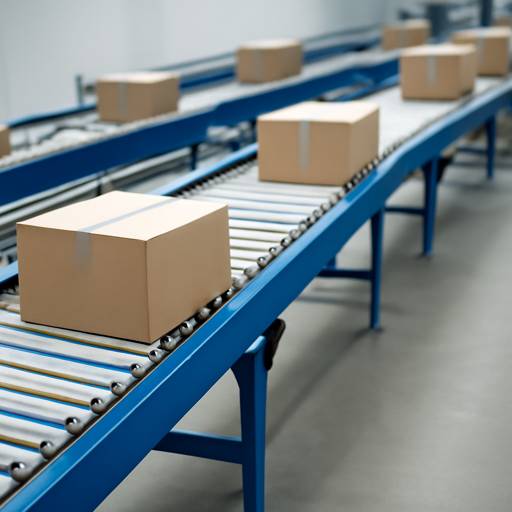
Every second at the dock counts. From e-commerce surges to cross-border parcel peaks, today’s operations demand speed, safety, and accuracy. A well-chosen loading and unloading conveyor transforms how freight flows between vehicles and the warehouse, reducing manual handling, cutting dwell time, and creating a safer workspace. Whether you handle parcels, totes, sacks, or irregular freight, the right conveyor bridges the gap between the trailer and your sortation or storage zones, turning bottlenecks into steady, predictable throughput.
What a Loading and Unloading Conveyor Does—and Why It Matters
At its core, a loading and unloading conveyor connects inbound and outbound vehicles to your facility’s internal material flow. Telescopic belt models extend directly into trailers, allowing operators to walk less, bend less, and move more units per hour. Reversible belts support both inbound and outbound tasks on the same dock door, while variable speeds help match the pace of upstream or downstream processes. For high-mix operations, flexible or gravity roller sections can be added at the nose for last-meter adaptability, handling cartons or polybags that vary in size and stability.
Modern designs go beyond basic conveyance. A telescopic boom can auto-index as the load face recedes, keeping the conveyor nose at an ergonomic reach point. Side guides stabilize packages, photo-eyes manage accumulation, and foot-actuated controls allow the operator to keep hands on the work. Optional operator platforms and integrated LED task lighting improve visibility inside dark trailers, complementing safety features like emergency stops and soft-start drives. These enhancements protect people and parcels while sustaining high productivity across long shifts.
In practice, the business value is clear. Parcel carriers can standardize load builds and raise trailer fill rates by maintaining consistent product flow. Cross-border e-commerce hubs reduce rehandling by aligning conveyor discharge with scan, weigh, and dimension (SWAD) stations. 3PLs gain flexibility: the same dock can pivot from inbound receiving in the morning to outbound staging in the afternoon with a few parameter changes. For organizations seeking a catalog of solutions that fit different dock profiles and freight types, exploring a dedicated loading and unloading conveyor lineup helps pinpoint the right combination of reach, speed, and ergonomics.
Regional leaders in conveyor innovation, including manufacturers focused on express delivery and warehousing, have refined designs for Asia-Pacific logistics hubs where space is tight and peak volumes are intense. These solutions emphasize modularity—attachable gravity extensions, adjustable boom stages, and quick-change belt options—so facilities can scale as volumes grow or shift. The result is a robust yet adaptable system that supports continuous improvement and long-term ROI.
Key Features, Specifications, and How to Choose the Right System
Selecting a loading and unloading conveyor begins with understanding your mix of packages, vehicles, and workflows. Start with capacity and geometry: belt width should match your dominant parcel footprint, with side guards sized to prevent lateral drop. Load ratings need to reflect both average and surge conditions, covering denser items and irregulars. Consider typical trailer types—standard vans, high-cube, or containers—then size the extension length and boom stages to reach the front wall of the farthest trailer. Adjustable elevation supports dock height variations and ramps, ensuring a smooth handoff to interior conveyors.
Throughput and control matter just as much. Variable-frequency drives enable speed tuning, allowing a gentle pace for fragile items and a faster rate for durable cartons. Reversible direction expands utility at each door. Smart sensors regulate accumulation zones, spacing parcels to prevent jams and optimize scanning. Integration with warehouse control systems (WCS) or programmable logic controllers (PLC) provides visibility into runtime, cycle counts, and alarm codes, enabling predictive maintenance and fine-grained performance management.
Ergonomics and safety should be non-negotiable. Look for boom auto-leveling to maintain a comfortable working height as the trailer load shifts, minimizing bending and overreach. Consider handrails, non-slip decks, and lighting to reduce slips and missteps inside the trailer. Intuitive controls—foot pedals, pendant buttons, or proximity sensors—let operators focus on handling without constant repositioning. Comprehensive guarding at pinch points, along with E-stops and anti-collision logic, creates layers of protection that align with global safety standards and local regulations.
Durability and serviceability drive total cost of ownership. Industrial-grade belts with abrasion-resistant top covers extend life when handling rough cartons. Enclosed drives and sealed bearings block dust from high-traffic warehouses, while tool-less belt tensioning and quick-access panels minimize downtime. Energy-efficient motors reduce operating costs during long duty cycles. Some facilities benefit from hot-swappable components—belts, rollers, sensors—to keep uptime high during peak season. When evaluating providers, look for local or regional parts availability and trained service technicians who can support tight maintenance windows.
Finally, map the conveyor’s role in the wider flow. Does the nose feed a scanner array, weigh deck, or cross-belt sorter? Will the discharge align with palletizing, gaylord fill, or putwall induction? Clear interfaces prevent backpressure and ensure each subsystem performs at its best. A future-ready loading and unloading conveyor should be modular enough to accept extensions, transition plates, or diverters as your process evolves—so today’s investment continues delivering value as volumes, SKUs, and service levels change.
Implementation Playbook: Layout, Integration, and Measurable ROI
Successful deployments start at the dock. Begin by analyzing arrival patterns, truck types, and dwell times. A layout that positions telescopic booms centrally across busy doors reduces repositioning and keeps sightlines clean for forklift and pedestrian traffic. Where multiple carriers arrive in waves, standardizing door assignments and staging areas helps prevent cross-traffic. If ceiling height allows, staging tables or ergonomic lift assists at the conveyor discharge create a safer buffer for scan-and-sort tasks, preventing pileups that can ripple upstream into the trailer.
Digital integration amplifies gains. Connecting the loading and unloading conveyor to your WMS/WCS unlocks event-based logic: auto-start when a trailer check-in is scanned, speed-up during sorter idle, or index forward when an operator clears a work zone. Add barcode and OCR readers near discharge to reconcile shipment data in real time, routing exceptions to special handling. For cross-border operations, tie compliance checks—labels, manifests, inspection flags—into the conveyor logic so compliance doesn’t create bottlenecks. Data from sensors and drives feeds dashboards that expose true cycle times, uptime, and the sources of micro-stoppages you can eliminate.
Change management is essential. Train teams on ergonomic best practices: keep the conveyor nose at knuckle height, rotate tasks to avoid fatigue, and use the boom’s auto-index features instead of stepping into awkward reaches. Build a simple daily checklist—inspect belts, test E-stops, verify lights and sensors—to detect issues early. Quarterly audits of belt tracking, bearing noise, and control logic keep performance consistent across seasons. Many facilities adopt a stepped approach: start with one or two booms, codify standard work, then scale to more doors once KPIs stabilize.
Consider a real-world scenario common in high-growth logistics zones. A mid-size 3PL handling e-commerce returns in a coastal trade hub was battling 60–90 minute unloads per trailer. By introducing two telescopic units with auto-indexing and zone accumulation, then aligning discharge with a weigh-dimension-scan cell, the team cut truck dwell times by nearly half and reduced manual touches per carton. Operators reported lower fatigue, while supervisors used conveyor runtime and alarm histories to pinpoint training gaps and minor mechanical issues before they grew. The result: steadier peaks, fewer surcharges for carrier delays, and a clear data trail that justified expanding to more doors.
Local support and lifecycle planning round out the strategy. In regions like the Greater Bay Area—where express delivery, warehousing, and cross-border logistics coexist—facility constraints and peak profiles can vary widely between sites just a short drive apart. Partnering with manufacturers experienced in these environments shortens commissioning time and ensures spare parts and service are nearby. Over the lifecycle, budget for belt replacements and periodic control upgrades that add features like energy-saving modes or enhanced diagnostics. With a forward-looking plan, your loading and unloading conveyor remains a high-impact asset that adapts as your network grows and customer promises tighten.